Showing posts with label White Rocket Books. Show all posts

Sunday, March 17, 2013

Elsewhere In The Multiverse Part Five: Meet Jeff Deischer!

Somehow, I think Jeff is older now...

Many writers have looked at the various super-heroes that have entertained them throughout th years and desired to make something of them.  For the majority of people who have this desire, the path leads to fanfiction.  Some people actually get entrance into the hallowed halls of Marvel or DC and get to guide the lives of present day heroes.  Some, like myself, Van Plexico, Lee Houston Jr. and others who have graced The Agency, have created their own super-heroic universes to play with.

And then there’s Aurora, Colorado’s Jeff Deischer.

In Deischer’s new novel The Golden Age, now available from Van’s White Rocket Books, Jeff has taken the entire Standard/Bettor/Nedor stable of super-heroes that battled evil from 1939 to 1956 and built an entire super-hero universe from the ground up in an adventure with WWII as the backdrop.  Jeff finds ways to connect such disparate characters as Major Wonder, The Sphinx, The Crusader, The Black Terror, The American Eagle, and Pyroman to create a coherent world that was anathema in the Golden Age of comics.  This results in a super-hero novel that is true to the Golden Age while also having the feel of a modern continuity-heavy super-hero comic universe.

So let’s take a few minutes to learn about Jeff Deischer and The Golden Age!

Jeff, welcome to The Agency!

Thanks for having me!

So tell us about how you got into comics, and what led you to write THE GOLDEN AGE....

I started reading comics about 1970, though I have a very few from before that. I was exclusively a Marvel fan, reading a combination of new stuff and Lee-Kirby reprints.

I'd being done mostly pulp stuff, both fiction and non-fiction for a few years and really wanted to do something with superheroes. After a couple of false starts, I decided the best way to market a superhero prose novel might be do use public domain characters. So after making a survey of 1940s defunct comics companies, I decided that Nedor would be best, mostly due to the large number of characters they had.

Why do you think more writers don't plumb the depths of public domain characters?  There's literally hundreds, maybe thousands of characters a writer can make something out of lying around for the asking!

I don't know. It hadn't seriously occurred to me until I'd read Dynamite's Project Superpowers series, which I thought was the most interesting comics idea in some years. The current trend of comics mostly turns me off. It seems like it's all about a new idea and a quick buck, rather than good, old-fashioned storytelling.

The thing I loved about your mining of Nedor is the sheer width and bredth of the characters you unearthed--I mean, who could believe that there was a character as oddball as The Reaper running around in the Golden Age of Comics?

Yeah, thanks. From the start, my intent was to introduce and entire universe of characters, not just one and then explore his milieu through only his eyes. I think that's what intrigued me about Project Superpowers, to some degree -- there's all these different characters, from diverse companies and background. It was like opening a present every issue! I didn't really think of this on a practical level, but one advantage is that there must be some character that a reader will like, with all the variety.

Yeah, and I liked how you made some connections between them-particularly how you kind of put Major Wonder. Pyroman and The Crusader together as one branch of the Nedor family tree.


Given that so many of the characters you were working with were tabula rasas--being in some cases a costume, a power set and a secret identity--how much did you add to the way the characters were presented to flesh them out?

 To begin with, I started with very few preconceived notions. Originally, I knew very little about any of the characters. I found a few online sources (Wikipedia being one of them, and maybe International Heroes), which gave only names, maybe a civilian name, maybe a photo of a costume and maybe a foe. So I basically filled in everything else in most cases. Then, when I was about 3/4 of the way through the manuscript, I found Comic Books Plus website, which has many, many issues of the old Nedor comics. I spot-checked some stories, and made a few changes based on when I found, but not many -- I liked what I'd developed and didn't want to rewrite the manuscript from the start. And because the Golden Age stories what they were -- long on plot and short on characterization  I really didn't have to change much. Introducing so many characters didn't allow me to get into supporting cast, which is really what the comics turned up more than anything.

Speaking of your cast--it is MASSIVE!  How did you keep track of everybody while advancing the plot of the Gold Dragon Society's creation of Project: Sakura?

I used 22 characters, not counting 2 sidekicks. I started with the overall progression of the Dragon Society's scheme, and then plugged heroes in as I felt they could fit. For example, having the villains arrive on the Wesrt Coast (as might be expected), allowed me to use West Coast heroes. Ditto the Africa and European locales. With most of my heroes in NYC, that's where things got a bit tricker. But I had a master list of characters I wanted to use, so had something to work with there. You might notice that Doc Marvel gets a chapter and half that has nothing to do with Sakura -- but I wanted to include him in the book, so found a way to tie him in. It was easier than you think, probably. Characterization was just as important as plot to me.

Was there any character who 'broke out' as you wrote him or her, someone who ended up with a larger part to play in the story?

Until I got to plotting the finale, I didn't who it would star. In the first draft of the plot, it was just "some heroes".  But as I got to outlining the ending -- the outline containing specifics of who does what, for those who don't know the difference between a plot and an outline -- I saw that I could keep using Major Wonder and Pyroman, who'd starred in the previous two chapters, and then logically tie them to the Crusader -- thereby giving symmetry by ending the story with the hero who had begun it. But the breakout "star" to me is the Reaper, whom several people have told is their favorite character. He's mine, too, if I had to choose one.

He's just so....weird, although I suppose he falls into the tradition of The Psychic Detective that includes Dr. Occult on one side and Kolchak and John Constantine on the other....

So since you wanted to give these characters actual character...how did you approach making each of your Terrific Two Dozen distinctive for the readers?

Weird "good", I hope. The only description I had for the character upon whom the Reaper is based was something like, "wears plainclothes, possesses superstrength which seems to be supernatural". So I had a lot of room to work with. I thought, maybe it would be interesting to make him a mystic bloodhound that doesn't really know what he's doing. In this way, he wouldn't be invincible, like some mystic characters ought to be based, on their powers. It was an interesting take to me, anyway, and that's were things begin: If I'm not interested in my characters, how can I expect readers to be?

To answer your other question, what I tried to do with each and every character was to figure out what I thought made them who they were, that is, unique as a character, then build upon that. I tried to make them more realistic, more logical. So a lot of the minor changes I made I'd probably have made even if I'd had access to all the stories before I started the project -- maybe they'd be different, as I try to use as much of the original material as possible for inspiration (in later volumes that I've been working on), but I'd still discard or rearrange bits that I feel don't fit. Readers are more mature today than they were 60 years ago, and they expect characterization and realism.

How realistic did you want the WWII backdrop of the story, given that some of these characters have real life events like Pearl Harbor as part of their origin?

I'm no expert on the period, but I'm knowledgeable. I used what I knew, then did research to fill in the blanks for what I didn't know.  I used a lot of real-life material in small ways.

I'm assuming the Hood and the Golden Dragon were two separate personages in the original stories--what made you fuse these two villains into one?

Neither appeared in the original stories. I hadn't read any of the original stories until the first draft was 3/4 finished. So all of the villains with the exception of the Tankonaut, are my own creation.

And the Hood was a Black Dragon, not the Gold Dragon.

And I would have thought the Tankonaut was the original one...he seemed like a take-off on the Juggernaut!

"He" started off as a flying tank in the original story, and I wanted an honest-to-god supervillain, so I spruced him up a bit.

The Tankonaut does provide a moment of comic relief during a period where the book is getting kind of grim...

That was on purpose, of course.

Now at the end of this novel, you have an entire, coherent super-hero universe.  Did you do this with the idea of taking your characters further down their timeline, maybe even past the 1956 date when Nedor ceased publication?

Yeah, there will be many, many future volumes. I have about 30 planned, some which will take raeders to other times and other worlds, but most will occur in the "golden age" -- 1939-56.

I know that a rare handful of the Nedor characters have had previous revivals--I'm reminded of the Beau Smith Black Terror, for example. What do you hope readers coming to your novel will get from your versions that others haven't provided?

Well, it's both authentic pulp and authentic superheroes. I haven't read the BT you mention: I read the Chuck Dixon version and liked it -- but he wasn't a superhero. So the book should appeal to anyone who likes pulp adventure or superheroes.

That's the great thing about the novel--the way it successful straddles both genres--and both the 'golden age' and silver age' sensibilities--while seeming thoroughly authentic.

Thanks. I started with the idea of comics coming out of the pulp era, and wrote it like it was being told in the Silver Age, (as far as plot and characterization) when I read comics, but with a pulp narrative.

And it does come off as very silver age--sort of like reading an issue of THE INVADERS did back in the 70's.  

Give the massive cast you've fleshed out, have you thought about letting other writers play in your toybox, writing stories of some of the characters who were more in the background of this story?

I have, particularly the other worlds stories, so that they will have a different feel from "my" Earth. Also possibly the other time period books, so that I can concentrate on the golden age. I'd have no objection of stories by other writers, if there was an interest for it, and Van [Plexico, publisher] wanted to ride herd on such a project.

Speaking of Van--he has his own little super-hero universe...have you talked about, somewhere down the line, a...ahem...Crisis on Two Earths?

Nope. I think we're both much too busy to think about that now. But I do have the history of the Auric Universe worked out from millions of years ago to 500 years in the future.

You say you've got thirty new stories to tell--want to give the readers of The Agency some hints as to what lies in the future of the Auric Universe?

Future volume will focus on characters who either didn't get much space in TGA, or who are popular. I know that the Black Terror is popular and he's set to star in at least two novels set in 1949. The second volume, Mystico, should be out next month, and starts the AU's mystic heroes, who team up to fight Nazis looking for a mystical object in the US in 1940. Volume 3 (Dark of the Moon) stars fringe characters who weren't seen in TGA; these are civilian heroes and has very strong ties to earlier popular fiction. It is connected to Lost World, First Men in the Moon, Frankenstein, and others.

I'm working on volume 4 now, Crusader, which covers the first year of the Crusader's career

So we'll be seeing more of The Sphinx, The Scarab and the other mystic characters we meet in the second act of THE GOLDEN AGE?  Dare I hope for a Reaper solo book somewhere? 

The Scarab debuted after the events of Mystico. It stars Haldor, the Sphinx, the Reaper, Theseus, the Oracle, the Ghost and Spectro the Mind Reader. And one of the enemies ... super Heydrich! It starts in ancient Spain, with Percival encountering Klingsor, from "Parzifal".

 A Reaper novel? No plans at this time.

That's okay...the idea of The Reaper interacting with Theseus, who is...odd...should be fun enough!

Each character gets their origin told. It also covers the Knights Templar and there's a lot of weird, true stuff in it.  It's sort of the AU verion of The Da Vinci Code.

Jeff, is there anything else you'd like to alert the denizens of The Agency to?

In addition to future volumes of The Golden Age series, I'm working on two other superhero books this year, one set in the present and the other using more public domain characters. I'm acting as editor and plotter of that book, which will be three parallel, concurrent comic book series in prose form.

Cool.  hopefully when these new projects reach fruition, you can return to our humble abode....

Be glad to. I'm glad you liked the book and thanks for giving me the opportunity to talk about it.

You’re welcome, Jeff, and thank you so much for stopping by The Agency!  THE GOLDEN AGE is available through Amazon, and White Rocket Books.

Sunday, December 9, 2012

While I'm Waiting For Something Cool To Announce--Here's Some Presents!


Hey, fellow Nocturne Travellers!  I know I've been kind of, sort of under the radar lately as I strive to finish The Shadow Legion Casebook Volume 1: Four For Danger, and wait for the release of The Shadow Legion: New Roads To Hell...along with Tao Jones and one other thing I will tell you about once I cobble together an outline and get an approval.

But...being as this is the time of the season, I wanted to point your way to two special gifties you all might enjoy.

If you remember, a while back I interviewed Van Allen Plaxico and Ian Watson.  Ian told me about the Blackthorne series that is published through Van's White Rocket books.  Well, if you go to Amazon right now, you can purchase Blackthorn: Thunder On Mars for your Kindle for only ninety-nine cents.  That's right--top notch sword-and-sci-fi action stories in the Jack Kirby and Edgar Rice Burroughs tradition for less than a dollar!

You don't have a dollar?  Well, don't fret.  Pulpworks Press, the New Pulp publisher that presented the How The West Was Weird series--the weird western anthology that introduced my creations Don Cuevo and Doc Thunder to the world--has put together The Pulpworks Christmas Special 2012.  It's a collection of great pulpy stories from Derrick Ferguson, Josh Reynolds, Joel Jenkins, and Russ Anderson.  And it's absolutely free in electronic format (If you're a traditionalist, you can also purchase it for eight dollars from Amazon or Pulpworks Press' web site).  Just go to the Pulpworks Press blog and follow the links.

Hey, it's Christmas-y, pulp-y fun for you, for less than a dollar--free is less than a dollar, right?--so get to clicking!  And if you're a pulp author or publisher who has a similar special offer, let me know and I'll let my handful of readers know in turn!

Sunday, July 8, 2012

Elsewhere In The Multiverse Part Two: Meet Ian Watson!

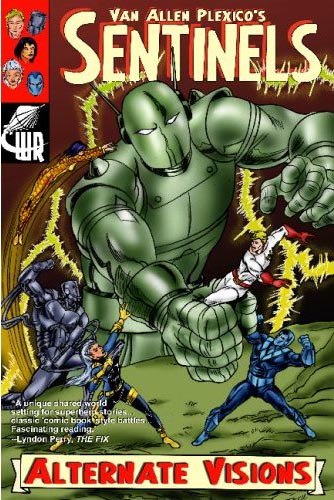
Ian Watson is a very, very busy man. Working out of his home in Yorkshire, England, he's managed to contribute to a number of legacies--not the least of which are Robin Hood through a trilogy of novels and Sherlock Holmes in a series of short stories in collections available from Airship 27. He's revived obscure pulp characters like Armless O'Niel and Richard Knight, and has contributed to the tapestry of our previous guest Van Allen Plexico's Sentinels Universe through the anthology Alternate Visions.


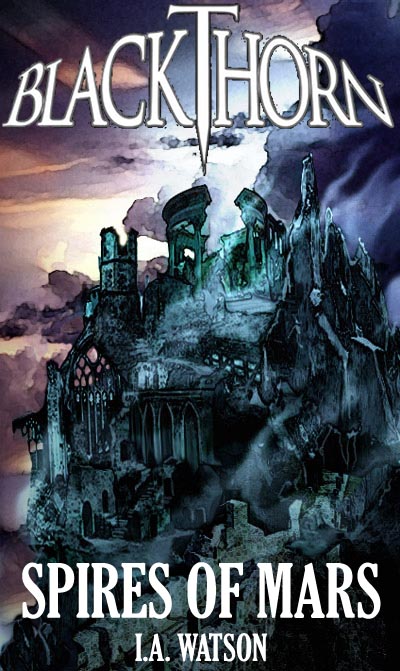
And now he's about to carve out a little slice of Mars for himself as two novels set in the Blackthorn Universe debut this week. Watson contributed to the original anthology of stories about an American soldier transported to a far future, post-apocalyptic Mars, Blackthorn: Thunder on Mars, and his two new contributions seek to expand the world of Blackthorn and his allies even further. Spires of Mars is set to be a serialized novel available three days a week online designed to expand the world and add a touch of the cosmic to the Burroughs-by-way-of-Kirby adventures, whereas Dynasty of Mars will focus on Aria, the Princess of Mars--and promises to span over a thousand years of this exciting franchise's history. So let's learn more about the man Van Allen Plexico call 'the most prolific man in England'...Ian A. Watson!

Thank you for taking time out to talk to me, Ian.

It's a delight to travel with Nocturne.

So you've been part of the Blackthorne project pretty much from Day One. What is it, do you think, about these Jack Kirby super-hero/pulp post apocalyptic mash-ups that's so appealing?

Kirby had that rare ability to catch a zeitgeist and make it come vibrantly alive. He could fold in ideas that were so diverse, so wild, and yet made them all seem like a natural roller-coaster adventure. When it comes to weird landscapes, weirder beasties, and the weirdest plotlines you can't beat the King.

So if you want to reach to the further edges of science fiction and fantasy and polish off old tropes like Burrough's Mars you can't really go wrong with Kirby as a route guide. Also, Kirby's art and storytelling are very stylised, primal things. They go right for the big reaction. That's a very big help when you have a broad story framework to work off.

And I always loved the fact that Kirby was so selfless about encouraging others to go and create like he did. He loved inspiring other people.

I think Kirby loved to go to that place of imagination and to take others with him--or meet them there.

So how did you get involved with the initial Blackthorn anthology--I know you contributed to Van's two Assembled anthologies of non-fiction about The Avengers.

Van invited me to contribute a story to his guest-writers Sentinels anthology, Alternate Visions. That fits between his first two Sentinels trilogies. So I offered a really tiny tale based on what a Ditko Strange Tales backup might have been to a Sentinels comic-book. We'd already corresponded about the Assembled books by then. He kindly included a huge chunk of ther material I dumped on him for those projects.

Then he hauled me in to do some of the work on the Gideon Cain anthology, about a Puritan demon-hunter who is in no way affiliated with any property owned by the Howard estate. So by the time we'd decided through mailing list chat thaste there was an urgent need for a futuristic SF adventure series on Mars I was on his call-sheet.

Steve Ditko--another great contributor to the tapestry of comic book fans' dreams...

Ditko, I think that sense of the weird breaking into the everyday that he mastered is also somewhere in the DNA of the Blackthorn series. And if we're really digging out old comics comparisons, I think we owe a debt to Don McGregor's Killraven too.

To me, the toughest thing about developing a property like this is in creating a world that's totally believable, yet also totally alien to the reader. How do you approach building that world, its history and its features so the reader will be sucked right in?

In this case we wanted to echo and homage some previous, quite famous work; but we didn't want to do a rip-off that had nothing new to say. So we start with the familiar, the sort of stories and settings that won't seem to strange to readers of Burroughs or Kommandi, or viewers of Thundarr, and then we use that as a platform to launch off into newer and more original realms.

I like to be able to figure out how things work in a world, even if they don't make it into the story. So if Mars is now habitable by humans, how and why? Why is there apparently magic as well as science there? Why are there ruins, and monsters? So we had to work out a whole backstory, about how humans came to be on a now-Earth-like Mars, about why there are no humans on Earth any more, about how civilisation fragmented into a feudal barbaric remnant, about how the four main villains of the series rose to power. That in turn inspired a lot of the material in the two books I've just completed.

I have found sometimes that working on one aspect somehow creates an insight into another aspect of either the world or the characters who inhabit it...there's a sort of, I dunno, synchronous serendipity when you're properly emersed in the project that allows connections to be made...

I also like little details. The Martian year is 687 days long. What does that do to the agricultural calender? There are ongoing millennium long wars. Who supplies the weapons?

And the great thing about little details is how they sometimes give you new story hooks you otherwise hadn't considered!

One of the fun parts of working with a collectively-written universe is that other writers throw in flavours I'd never have thought of. While that can sometimes mean one has to reign in ego about control it also means there's a whole bunch of raw potential to mine later on.

For example, at the end of the first Blackthorn anthology, "Thunder on Mars", Van thought we needed a kind of epilogue that moved the plot on to the next phase of the story, from wandering adventures to organised rebellion. So he threw in a meeting with a bunch of characters who he only named. Didn't even describe them In the two novels I've just turned in, the soon-in-the-shops Dynasty of Mars and the special project Spires of Mars, every one of them gets an origin and a story.


So when you and the other writers were developing the world of Blackthorn, how did you keep everything straight--was there a central site that you ended up using as a repository, did you use a mailing list of board...?

First time round we flew by the seat of our pants. Van came up with a "bible" that had some basic information. Then he had to do a lot of editorial reconciliation. We got away with it that time, I hope--barely. Future collaborations will need to be much tighter now we've got much more established continuity.

Fortunately now we're about to launch the Blackthorn website. That includes some fan-generated reference material. A Who's Who with bios, a Where's Where, a Glossary of Martian terms, plants, weapons, monsters, foods, etc. So that can help in future. My suggestion that Van host a planning weekend in Hawaii was unfairly dismissed, I feel.

You seem to be firmly in the driver's seat for this next phase, with these two novels--how did they develop?

Van and I discussed how to develop the franchise. The thinking had been to put out a companion set of stories to those of Van's very popular Sentinels series. They cover high action and even cosmic adventure in the present day. This would fit as different niche in a dystopian future. We'd got one try-it-and-see anthology under our belts, but things had ground to a hiatus.

Van was pretty busy having a life and stuff. So when I busted his chops about our grand marketing plan to get regular Blackthorn product out to feed a fanbase he threw it back at me since I don't have a life. I agreed to write a novel as the next bit of the storyline, to flesh out and bring together various concepts we'd discussed or touched on in previous stories. That turned into Dynasty of Mars, which covers a thousand plus years of backstory and details the first days of Blackthorn's revolution against the tyrant-sorcerers of Mars. It was also thought a good idea to do an free online, three-times-a-week episodic story to feed the interest of potential readers. So I agreed to pen a short series that could be used to drum up some attention. Unfortunately thast escalated to a full-length other novel. It'll still go out online free though.

See--the idea that you're taking it on yourself to cover a thousand years of Martian history floors me! I've been struggling telling fifty years of history for one lil' city, let alone an entire planet.

Probably the second-most important character of the series is Aria, Princess of Mars. She's the sorceress who supports, argues with, and sometimes is the romance interest of our big hero. Dynasty is from her point of view. Since she was born eight hundred years back (and has spent all but 22 of those years in suspended animation) she's ideal to explore the Martian backstory with. She is the rightful heir of Mars' original royalty. She has a mystic link with the people who made Mars what it is. So she's our key into the deeper mysteries of Mars. Our anthology, Thunder, more or less keeps Blackthorn as our point of view. An Earthman from today ends up on far future fantasy Mars. Dynasty reverses that. A Princess of Mars meets a strange hero from a legendary time. We see Blackthorn from her perspective. He's Captain America or King Arthur, returned at the time he's needed most.

We want our series to have deep roots, nuances, themes, developing plotlines; all the things that transcend the various elements we mixed in for our original pastiche.

How do you find writing from a feminine point of view? I've enjoyed doing it in the past, but I know some male writers who blanche at the prospect.

I have an eighteen year old daughter who wants to be an editor. She has strong views on female characters in fantasy, and good instincts. She's been watching Princess Aria very carefully--and me.

Aria's interesting to me, though. SF and fantasy are littered with princesses who need help reclaiming their throne. But Aria is also the daughter of one of our main villains, so she's not just Star Wars' Leia, she's Flash Gordon's Aura. And hopefully herself. I'm interested in what having a supervillain as a father must do to you. An unusual childhood, to say the least.

I wanted to ask you about the serialized form of Spires. Have you had to adjust your writing mindset to create a story that the reader will be experiencing not at his/her own pace, but in small chunks over time? Have you had to make allowances in terms of pace and exposition?

It's written very much with that in mind. Readers might be familiar with the previous stories or might come entirely new to it, so it has to offer all the right information as well as engage people in a good plot. In some ways we're going back to old-style comic book roots, with a serial story for which every issue is someone's first. In the days before comics were written for the trade paperback there was a real skill in making sure every issue offered a proper complete story while linking in to a larger narrative. Even the stories ending in cliffhangers felt like there was a start, middle and end there. I've tried to keep that in mind as I structure Spires of Mars. Each section pushes things on, but each should read like a mini-story in itself. Each one gently reminds readers of what they knew last time they read a bit of this. Each one adds on what's gone before to reward sequential reading. I hope.

I didn't want the tale to feel disposable or throwaway though. The first few chapters are nice simple adventure, but then we find that's all part of a much larger plot, and in the end we get a world-shaking revelation that changes everything in volumes to come.

Now I'm hyping like Stan Lee, true believer.

Don't worry about hyping--that's the reason the Travel Agency is opened, not just for my world, but the other worlds in the Multiverse of comic book style adventure in prose form!

Do you think that the success of the Blackthorn franchise arises from the fact that you're feeding a need for this sort of swashbuckling in uncharted territory style story in a comic book climate that just doesn't feel like giving to the reader?

Mainstream superhero comics of recent years tend to have become a bit incestuous in terms of recycling characters and plots. When you look at the wild innovation of the first 50 issues of FF, the volume of new ideas that came out of them, compared to all the issues since, you realise that there's a difficulty moving on to the new. Our main comics universes are fifty-odd and seventy-odd years old respectively, and the main elements of them have been in place for nearly that long.

You can take that first hundred issues of FF and see the entirely groundwork for the Marvel Universe to this day....

On the other hand, new creations like Hellboy and his universe, of Astro City, have done very well. I think there's a reader taste for discovery, for first-time world mapping, and then for interactions following from that.The adventure gets more intense when that terrible villain returns, but its better yet when he returns in some new fresh way. With Blackthorn, as with some other exciting literary superhero worlds, we're able to catch that vibe, both the new and the doing-stuff-with-what-we've-established. Because its prose, we can explore some nuances in ways that comic books can't.

Prose is really the only place you can get deep in the inner life of super-heroes, I find.

One of the great things about super-heroes as a genre is that, like westerns or detective stories, you can tell all kinds of different stories about them. Superhero mysteries, superhero romances, superhero horror, social commentary, rite-of-passage, group bonding, war tales, all kinds of stuff. But to get away with the "super" element you need to ground that in the everyday. Remember when Lee and Kirby's Thor stopped in for a milk-shake? Prose writing allows for that grounding very well. People are quite willing to accept a man can fly as long as when he's landed he behaves in ways we can understand and identify with. The characters and their reactions need to be real so the fantastic elements don't seem too much. That's why I was happy to be given novel-lengths to work with for Blackthorn. It allows for the "down-time" stuff as well as the high action. It allows for more team-building, character-based development. It's easier to offer personal arcs for characters, even the villains.

One of the favourite sports of superhero fans is blogging things like "Character X would never do that!" That's because we get to know our favourite heroes at least as well as some of the folks now writing them, and we develop that sense of how they are and how they'd react. If we can get readers to that place with Blackthorn then we've done our job.

So...what do you have in store for your readers after the Blackthorn novels are out in the world?

The third part of my Robin Hood trilogy, Robin Hood: Freedom's Outlaw, will be out before Christmas. I've just published a couple of short stories in the latest online fantasy magazine Wonderlust. Just this week I've been asked to develop another novel I've been puttering with, a murder mystery set in the Biblical Tower of Babel! And sometime I need to package off a final draft of a World War 2 action adventure novel called Sir Mumphrey Wilton and the Lost City of Mystery.

I'll also be reviving another classic pulp character for Pro-Se's Pulp Obscura line. There's a new female jungle superheroine I wrote a pilot story for due to appear in an anthology sometime, There's a novella and three more anthology stories sitting in the Airship 27 coming soon pile.

I think you'll have to visit the Agency again when Sir Mumphrey comes out, as you gave me a little high-concept about that book and it sounds right up my alley!

Yeah, I think you'd like the Mumph stuff. It's weird, and every chapter ends with a narrator asking questions of the audience and telling them not to miss the next chapter.

Holy moly!

Ian, thank you for taking time to visit The Agency.

The Spires Of Mars will become available a chapter at a time starting today, July 9th, here.  You can find Blackthorn: Thunder on Mars and Dynasty of Mars through White Rocket Books.

Friday, June 29, 2012

Elsewhere In The Multiverse Part One: Meet Van Allen Plexico

While you're all waiting for New Roads To Hell to near release, I thought I'd take some time to introduce you to some of the other superstars of the burgeoning genre of super-hero prose fiction. And who better to start out with than one of its leading lights--the man behind the cosmic super-hero series of novels published under the Sentinels banner. Check out our discussion of super-heroics, Jim Starlin, and e-books below....

I'm sitting here via the wonders of Skype with one of the Big Names in Super-Hero Prose Fiction, Van Allen Plexico. Van went from founding the Definitve Avengers site, Avengers Assemble, to writing his own team of super-heroes, The Sentinels, whose adventures are chronicled in a series of novels from White Rocket Books. Van, thanks for joining me.
Thank you! That's a mighty kind introduction.

Dude--there was a time when I visited Avengers Assemble several times a day...it was a great resource for Avengers fans! And now you've got a number of collections gathering up articles and such from the site and beyond, right?

Yep-- Assembled! and Assembled 2 are the books. Nearly everything in them is original, separate from the AA site. Vol 1 looks at the Avengers through the years-- the "Eras of the Avengers"--and Vol 2 focuses primarily on Iron Man, Thor, and Cap. Plus Kang and Ultron. They're both now on Kindle!! And we're working on Vol. 3 now, which will cover all the other eight zillion Avengers!

And both are also available through White Rocket?

Yep, or through any comics store (they're both in the Diamond catalog), or Amazon, or wherever.

Anyway, what led you to decide 'I'm going to write my own super-hero adventures?", and what made you decide to pursue the creation of the Sentinels through prose and not conventional comics?

Heh-- probably the number one question I've received over the years about the Sentinels is, "Why aren't these being done as comic books?" But, honestly--that would make them just like almost any other superhero comic. By writing them as a series of novels, I'm able to both cover a LOT of ground, time-wise-- more than a year's worth of story in just one book--and go more in-depth with the characters, the way a novel allows you to do.

As for why do it at all, I had plenty of story ideas in my head after a lifetime of reading comics and SF novels, and I wanted to sort of merge those two fields together-- a superhero team that operates in an "SF novel" / Space Opera environment.

See--that's something I find about writing prose--it gives you a greater window into the inner life of each character. There are certain things, like interior monologues, where prose works
better than comics....

Absolutely right.

So you were always looking toward the stars when it came to your heroes?

Yes-- the Sentinels do operate out of Esro Brachis's mansion in northern Virginia, near DC, but they spend a lot of time in space, dealing with menaces on the order of, say, the Kree/Skrull/Shi'ar, or Galactus.

I do mix in some "street-level" action, especially in the first three books (the 'Grand Design' trilogy), but the second trilogy is more space-based.

What is it about that grand cosmic epic storytelling--the sort of thing Jim Shooter did in the Korvac saga, or Jim Starlin seemingly does every morning as a reflex--that you find so attractive?

Hahaha! You are right about Starlin!

Starlin is definitely a guy who thinks only in grand strokes--and comics is richer for it!

That's a good question. I've always loved the cosmic stories, and the grand, huge sagas with lots of characters. Two of the first comic stories I read as a kid were the Korvac Saga and the Avengers Annual that Starlin did with Thanos. Those just blew me away, and I am trying hard to recapture the magic that I felt when reading those comics. Where everything is huge and dramatic and the fate of the planet and the very universe hangs in the balance!

But you still have to be sure to keep a very "human" storyline going with your main characters. The big stuff doesn't matter if no one cares about your "people" -- your heroes.

And the Korvac saga is one of those things so many people have tried to recapture and never quite got right...I think the closest anyone ever got was when Bob Harras did the Gatherers story....

Well, comics changed very soon after the Korvac story ended, and it became almost impossible to recreate.  Everything became a "themed event," where you knew how many issues it would run and it had a running title, like "Operation Galactic Storm" or whatever, and all the surprises were sort of drained out. With Korvac, you had no idea what was about to happen or how long it would last!

Which is why I think the Gatherers worked so well--it was a veeeeery slow burn, and you didn't realize you were stuck in a massive event until you were knee-deep in it....

That's true.

But getting back to The Sentinels--how did you develop your team? Did you have a central character in mind and build around him/her, have certain types in mind, were these guys always kicking around in your head waiting to be unleashed, etc?

Yes, yes, and yes.

Oh, more?

Yes, please! lol

Okay...

I had a set of archetypes in mind from the very beginning: A young person just starting out, who would become our main POV character. That's Lyn Li, the irrepressible Pulsar, a 19 year old Chinese-American college student who is hiding the fact that she possesses seemingly uncontrollable electromagnetic powers. She's the central character, and most everything we see is centered around her.

Then there's the old hand, the beloved national hero, Ultraa. He becomes Lyn's mentor. But he has issues of his own--not least of which is he has no idea who he really is! His only memories are of being a paranormal agent for the Pentagon, and he has no life and no identity beyond that.

The wealthy inventor guy is Esro Brachis, who longs to be heroic--and gets his chance in a big way!  He's the armored guy.

And lastly of the "Big Four" is Vanadium, who shows up early in the first book. He is possibly a man in armor; possibly an alien; possibly a robot; possibly a robot alien; or who knows what. But he is scarily powerful. Which side is he on??

So I can see that right here, in the early stages, you're setting up character 'hooks' for the reader to become invested in, which you can then return to for future storylines...

Absolutely.

Do you know where those 'hooks' will lead right out the gate, or do you plant them there with the intention of exploring them yourself, and then sharing your discoveries with the readers, in later books?

A little of both. I came up with these (and other) characters in long discussions with Bobby Politte, a good friend who is very sharp at building characters and plots. (He has a co-creator credit on the novels.) We worked out a lot of it at the start, and I've been slowly building toward the various reveals over the course of six books now. But of course new ideas and new developments constantly come along to add more depth and more fun to it all.

So you're always open to 'happy accidents'--little synchronous connections you can make between characters as you're writing the books?

Absolutely! In fact, I was astonished how well both the "planned" and the "unplanned accidents" stuff all came together particularly in the two trilogy/storyline-concluding volumes so far, Apocalypse Rising and Stellarax. Both of those books had to take all those seeds and threads that were set up in two previous volumes and bring everything together to satisfaction--and in both cases it totally exceeded my hopes and expectations. I think if you make your characters "real" enough, that's far more likely to happen.

There are probably eight or nine parallel-running plots in Stellarax, for example, and every one of them "clicked" together just right as I was writing it. It's very pleasant as a writer to have everything work out great, without having to try to restructure or (heaven forbid) "force" anything.

Yeah...my guys, one in particular, seem to have taken on a life of their own. You mentioned working with Bobby; do you find having somebody to bounce ideas off of helps you better realize the stories?

Definitely--Bobby has been great over the years at considering my ideas and saying, "That's cool," or "That's terrible," or "You totally copied that!" or "Here's a better way." And he created characters like Star Knight/Mitch Michaelson entirely himself, and just allows me to play with them in the novels.

I remember a quote from John Bryne, where he said one of the creat things about collaboration is that someone is always there to stop you by saying, 'Dude, being able to turn on computer lights at will is a stupid power'....chuckles

That's true. To point out things that just don't work, where you're forcing it unnaturally.

Getting on to another subject--do you think the popularity of super-hero prose is a reaction to the way mainstream comics have changed in the last ten or so years?

That may be so. I know for a fact that there are a whole lot of people out there who used to love comics and superhero adventures but don't care for much of what's being published today. If we can recreate that classic feeling from the Silver or Bronze Age in our novels and stories, we're definitely providing a service and giving a lot of people something they've missed. That classic Avengers feel is certainly something I strive to recreate.

I have been very honest that The Shadow Legion morphed out of my desire to do something akin to a DC New 52 reboot I could live with....

Yeah.

Isn't it weird that the only place you can find a 'real' Avengers experience these days is in the movie theaters?

Unfortunately so. And of course I blame one person in particular for that. But hey, let's not get negative. Hah.

Well, I see your guy and raise you my guy....we'd be ranting all day...lol

Hahaha!

As someone who loves to do the big cosmic, 'widescreen' events...how do you approach doing something that calls out for visuals in a very non-visual medium?

That's always a challenge. I think my background in reading tons and tons of space opera-ish novels ever since I was a little kid helps a lot. I absorbed the various ways to describe big, giant, cosmic events and characters and structures. Reading a lot of Starlin helped, too, because he uses a lot of dialogue and captions in very poetic ways to describe stuff like that.

I try very hard to completely visualize a big action scene, the way it would look in a comic book. Then I break it down by each character or situation within the scene. I usually have a notepad file open with all the participants listed out, as well as any notes I need for them.

A sort of 'war diary,' if you will, allowing you to chart the flow of the conflict?

Right. Then I try to think logically as to what each character would do in attack or defense, and how it would all mesh together. Then I try to put together sentences that use vibrant, action-oriented words that make it clear and exciting. And I also use a lot of "color-cues" in the Sentinels books. I think very "four-color" with them. I describe things --especially when action is moving fast-- in basic color concepts-- red energy beams, shimmering golden force fields, blue armor, etc. Make it visual in the reader's mind as best I can.

Color cues... action verbs... clarity. Those are my main tools for an action scene.

How do you handle another potential bugaboo--the dreaded 'exposition'?

In conversation whenever possible. Or spread out over multiple scenes. Anything to break it down into smaller bites. I rely on context a lot. I figure most readers of this kind of story will understand a lot of stuff without having to be spoon-fed.

You've structured the Sentinels' adventures as trilogies...why does that appeal to you?

Yes, the plan has always been to do sets of trilogies, and the first two are done now. (Wahooo!) It really just works well for this kind of material in a number of ways. It lets each individual volume be shorter--otherwise, if I did the entire story as one volume, it would be 600-700 pages or so. It allows for one volume to set up the characters and the conflict, another to make it infinitely more dangerous, and a third for the big climax and resolution. And you get more cover art with three books than with one!

That being said, omnibus paperback volumes of each of the two trilogies will be coming out later this year. The Grand Design (1-3) and The Rivals (4-6)

....and we all know the 'gotta have 'em all' mentality of the comic book fan, right?

Oooh, we certainly hope so!

That seems to be the case with the Kindle editions. Many times it has looked as if someone went in and bought all six at once. To which I reply, THANK YOU.

You mentioned White Rocket at the start, but I have to note also that Swarm Press, an imprint of Permuted Press, the noted zombie publishers, put out the first three volumes originally, in 2008. This summer their rights are expiring, and that's how White Rocket will come to put out the two new omnibus volumes, probably late August or September.

Do you think the increasing use of electronic delivery for prose has helped super hero fiction gain a greater foothold?

Yes, definitely.

1. The folks who read this kind of stuff are often on the leading edge of tech.

2. Having lower prices for e-books is helpful.

3. E-books really are this generation's pulp-- low-cost delivery to all.

The low price certainly makes it easier for a book to act as an 'impulse buy' for a reader who might not commit to an eight dollar paperback or a $25 hardback....

Exactly. And it allows for more writers to reach the public, than back when you had to get a big contract from a big publisher. So more characters, not just the licensed existing Marvel/DC stuff.

...and I imagine it keeps things in print longer than they would be in book form...

Very true.

Have you been working on the next trilogy for The Sentinels?

Yep! The next trilogy will be called "Order Above All," and the first volume is Metalgod. I'm about 25K words into it now. It should come in around 60K, probably. Cover as well as interior illustrations this time are by Chris Kohler, whose Starlin-esque style is just awesome. It deals with a lot of the fallout from the huge huge events of Stellarax.

Any hints you want to share with the readers as to what is forthcoming?

A couple of vague hints:

With the team divided after the events of Stellarax, the ones still at the mansion on Earth have to try to cobble together a new lineup. Think of those fun issues of Avengers where "The Old Order Changeth!"

Meanwhile, in space, those who have gone off on a mission to deal with a growing threat out there will be entering into that sort of "X-Men visit the Shi'ar Empire" territory!

I remember those 'new line-up issues being real events in the 70's and 80's!

And like the Avengers of that era, the membership really has grown over the course of six books into a rather large conglomeration!

So does this mean some new heroes are about to make the scene?

Well, actually--- yes! Remember the superhero tryout scene in Mystery Men movie?

Yes...yes I do.

That will be Lyn's world. Heh. Everyone who thinks they have a shot will show up. Poor Lyn. Poor Otto, expected to serve drinks and whatnot!

And she'll be in a position of more authority than she's used to, being considered an 'old hand' by these new heroes, I'd expect.

Yes. Bingo! She has had to really grow up fast. That is a key moment at the end of Stellarax, where the torch is sort of passed.

Of course, I flashed on that classic Perez cover with Gyrich chewing out the Avengers for being too crowded!

Chris drew that scene of everyone seated around the table. All that was needed was Gyrich. Or Shawarma!

Or Gyrich eating Shawarma?

Hahaha

Otto, by the way, is not the butler but sort of the caretaker-- and he's a relative of one of the members. And he does not like being expected to do anything for anybody, and especially not Lyn! Sort of the anti-Jarvis. Or anti-Alfred.

I think of him as a crewmember from Captain Aubrey's ship in Master and Commander, brought to the US and expected to mop the floors and whatever. He prefers to drink Esro's wine and watch TV. And gripe at Lyn.

And who wouldn't?

Van--thanks for taking the time to share your thoughts with the readers of the Travel Agency.
Hey, I really appreciate it!

Before we put a pin in this, is there anything else you'd like to shill/share with the good visitors?

Sure...

In addition to the Sentinels novels and the Assembled books, I also have a recently-released novel, Hawk, that is even more cosmic than this. Think Justified meets Green Lantern. And of course there's Blackthorn: Thunder On Mars, which is an anthology I created with some really good writers and artists involved. It's sort of John Carter meets Thundarr the Barbarian, and I think it is just awesome!

And all of these are available through White Rocket Books?

You can visit www.whiterocketbooks.com, or go to Amazon, or presumably to any bookstore, who can order them for you. I have other stuff with other publishers, but nothing new right at the moment.

So everyone go check out Van's work! And Van, once again, thank you for your time.

Thanks very much!!